
How 5 Simple Steps Deliver a Welcoming Event Experience
The words you choose and how you design your “Welcome” lobby can create confusion or, with a few simple steps, a much better experience for attendees. Richard John, COO, Realise, gives five tips to make your event welcome stand out.
So, what’s your reaction when arriving at an event? Is the sight of a line of people queuing for badges a welcome one for you? Or can we make the initial experience better? Having been to dozens of events here are my five registration tips in five minutes.
1. People are there to get into your event, not queue in front of a desk.
So choose your words carefully. It’s not ‘registration’ – they’ve done that. This is about a ‘welcome.’
Delegates come with varying degrees of preparation and competence. If they printed a badge at home, registered for your ‘fast track,’ or are brandishing their QR code on their phone with an understanding of how this all works, treat them accordingly.
Consider all first impression visuals in your welcome area. It’s common to see lines of desks with bulky printers and monitors completely obscuring the staff. Make your delegates first experience truly welcoming.
2. Don’t wait for them to come to you.
Physical – and human – signage helps your delegates get ready. So, have these placed on the route to the entrance. A sign reminding them to have QR codes ready, or to select the right line is invaluable. Each person processed just a few seconds faster soon adds up in a busy line.
Always be on the lookout for lessons you can steal from elsewhere; for example, many hotels have a check-in devoted to loyalty programme guests. Can you offer something similar, as these people already know how the system works? With technology developing at pace, bulky registration desktops can easily be replaced by tablets. This also allows your friendly staff to get out from behind that desk and connect with attendees.
3. Delegates and visitors are the lifeblood of your event, so make them feel that way.
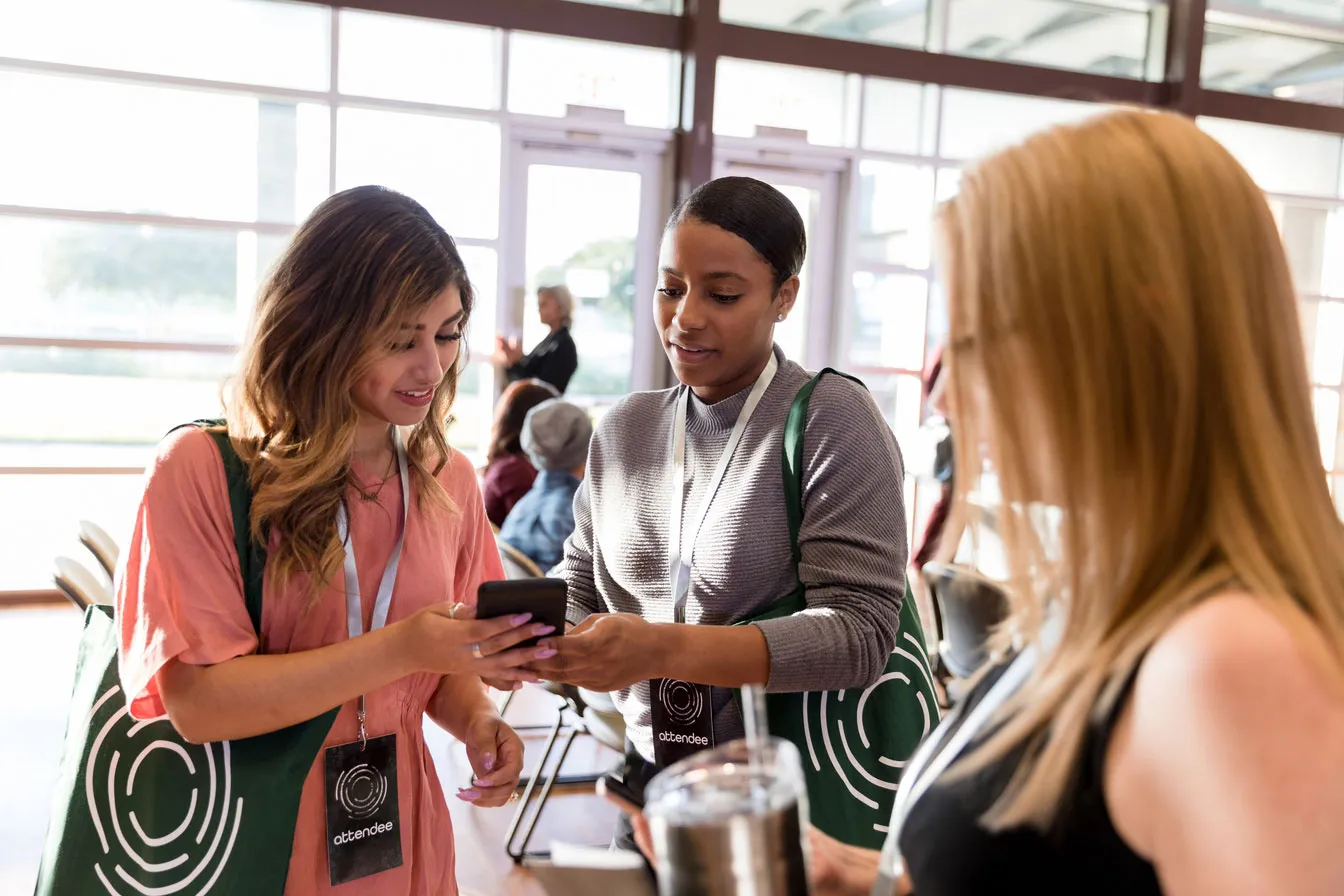
When your staff uses welcoming verbal and body language you are demonstrating you appreciate the effort to attend. Your ‘welcome’ desk – clearly designated – is where you greet people and provide the “We are so glad you’re here!” information.
If you have a tech-savvy audience, iPads connected to scanners and printers can be set up in a friendly and efficient way that delights visitors. Freestanding pedestals and a friendly staff member on a stool will give a much better perception. You provide a quick ‘self-serve’ option to those who can and a helping hand for those who need it. This arrangement can also make the lines look shorter. Lines of queuing guests look great on Press photographs but are unlikely to be appreciated by your attendees. Whilst some organisers believe that the ‘human touch’ on reception is vital to the customer experience., it’s not always the case. Even on the –admittedly rare – occasions when I fly First Class, I still don’t want to talk to people until I’m in the lounge or even on the plane.
4. Think the numbers through.
There’s nothing worse than a crowded check-in, but a reception with lots of stations and no delegates looks bizarre and implies you failed to deliver the crowds. So – as with every element of your event – interrogate the data.
- When do your visitors arrive and when are the likely bottlenecks?
- What percentage come armed with app and an entry code?
- How fast can badges be printed and distributed?
- What percentage of delegates need ticket changes and payment amendments?
- Will visitors be causing further blockages by debating which colour lanyard to choose?
5. Make changes at the end of day one if it improves the experience.
Once the first day is over, how many staffing stations can be packed down? How do numbers change for day two? How many people need badge reprints? Can you repurpose space for a day two feature? Most organisers have the answers they need with a quick review of their registration data and input from Welcome area staff. There is a myriad of new opportunities to shine – if only organisers can be bothered to look.
Bottom line:
Getting those first few moments right can set the stage for your event.
Take the time to think things through from your attendees’ perspective and give them a greeting that they’ll remember – for the best reasons.
Get in touch for your event registration strategy and delivery